Featured

Mental Health in Youth of Color

I have chosen to focus on the issue of mental health care access in schools for children and adolescents. I chose the bill H.R. 5469, To address mental health issues for youth, particularly youth of color, and other purposes. The reason I chose this bill is that at the moment I am placed at an alternative school and working with at-risk youth who are in high school, and the students are primarily youth of color. Currently, this bill is sitting in the House, it was introduced on December 17, 2019. This bill aims to address mental health in schools by implementing a school-based mental health program with culturally appropriate and trauma-informed strategies. This bill focuses on developing this program in schools that provides comprehensive mental health services for students who are dealing with traumatic experiences, grief, risk of suicide, and violence (H.R. 5469, 2019).

The social work perspective on this issue is that it is essential for children and adolescents to have access to mental health care, especially in schools. It is fundamental that the program provides trauma-informed care and that it serves all students regardless of their age, religion, sexual orientation, and/or color. The social work perspective focuses on the clients’ environment and their systems, using the frameworks Person in Environment, and the Systems Theory. These frameworks will also help address how students’ mental health issues are being impacted by their systems.
Advocating for Mental Health Services in Schools

It is time that all schools begin to implement programs that provide access to mental health services for students. Mental health is an essential part of our daily lives and without proper access to mental health care, many are impacted by this in our society. Individuals who do not have health care, primarily low-income families, often are unable to receive care that will attend their mental needs, which can even affect their work and/or school performance. Access to mental health services is a need in our communities, not a want. Therefore, supporting bill H.R. 5469, also known as Pursuing Equity in Mental Health Act of 2019, will be vital to the mental health of children and adolescents in schools. One major aspect of H.R. 5469, is that they will implement a school-based mental health program that “incorporates positive behavioral interventions, family engagement, student treatment and multigenerational supports to foster the health and development of children, prevent mental health disorders, and ameliorate the impact of trauma” (2019).

Advocating for policies that will implement school-based mental health programs, and address the problem of lack of access to mental health services for children and adolescents is crucial. According to an article by the World Health Organization, “promoting psychological well-being and protecting adolescents from adverse experiences and risk factors that may impact their potential to thrive are critical for their well-being during adolescence and for their physical and mental health in adulthood” (para. 1, 2019). As a future social worker, I believe it is our job, and the job of our nation to advocate and address this need that is vital to our children, adolescents, and adults. Without the appropriate implementation of mental health services, we are doing more harm to our citizens than good.

World Health Organization. (2019). Adolescent mental health. Retrieved from https://www.who.int/news-room/fact-sheets/detail/adolescent-mental-health

Traumatic Events Impact Mental Health

Mental health is a part of everybody’s lives, and it is something that requires attention, just as much as our physical health does. Currently, in the world there is a pandemic going on that has forced schools to transition into virtual learning which has affected the learning of students. Mass school shootings have also impacted the lives of students and their families. The reason why I mention this pandemic and mass school shootings is that these traumatic events have a major impact on the mental health of children, adolescents, and adults. Mental health services and programs should be made available for students in our schools that address their mental health needs.

According to Dr.Dikel, “mental health disorders can affect concentration, memory, on-task behavior, self-control, judgment, problem-solving abilities” (para. 3). This statement provides insight into how greatly mental health disorders can impact the cognition and behavior of a student. Moreover, students with mental health issues “are likely to have poor outcomes:  higher dropout, arrest, and unplanned pregnancy rates, lower employment and post-secondary education rates, etc.” (Dikel, para. 3).

On the other hand, according to an article by Kevin Mahnken, “since the onset of these problems can be difficult to detect, and millions of families lack health insurance, children must often rely on mental health resources provided by their schools” (Mahnken, para. 4). Children often rely on schools for these services, but networking and partnerships are other ways to bring stakeholders together to gather and share resources to address the need for mental health services in communities. Moreover, it is also essential that programs are not just developed, but that they are also evaluated within a certain timeframe to ensure that students receiving the appropriate services and ensure that the interventions are effective.

References

Mahnken, K. (2017). The hidden mental health crisis in America’s schools: Millions of kids not receiving services they need. Retrieved from https://www.the74million.org/the-hidden-mental-health-crisis-in-americas-schools-millions-of-kids-not-receiving-services-they-need/

Dikel, W. (n.d.). Providing mental health services in public schools – what educators need to know. Retrieved from http://www.williamdikel.com/providing-mental-health-services-in-public-schools-what-educators-need-to-know.html

Importance of Bill H.R. 5469

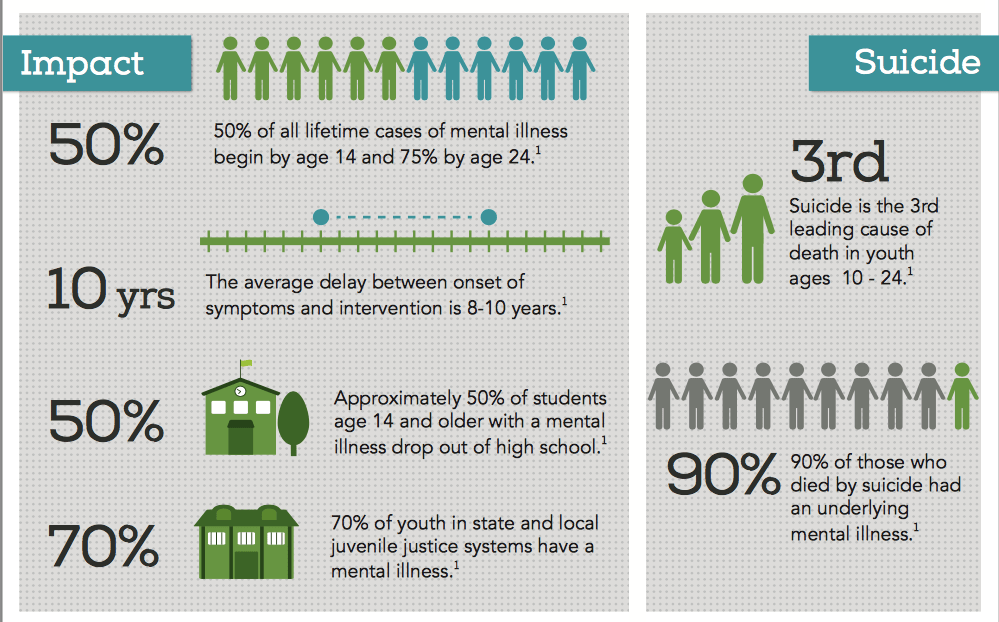
The last action of the bill H.R. 5469 was on December 17, 2019, when it was referred to the House of Committee on Energy and Commerce. The problem that this bill is trying to address is mental health issues for youth in schools especially youth of color. This bill aims for mental health programs to be established in schools for students and to provide mental health services with trauma-informed and culturally competent focus (H.R. 5469, 2019). According to National Alliance on Mental Illness, “many mental health conditions first appear in youth and young adults, with 50% of all conditions developing by age 14 and 75% by age 24” (National Alliance on Mental Illness, n.d.). This is important to consider when teachers and faculty are working with students who are presenting behaviors and academic issues in class because appropriate services to students can be provided.

The social work perspective views this issue from the Systems Theory approach, which focuses on working with the client to strengthen their systems that impact his/her life. Some systems that generally impact a high school student’s life is their family, school, home, work, etc. It is also important that school staff, like administrators, social workers, teachers, coaches, tutors, counselors, etc. to be aware that students may have experienced different types of traumas in their childhood, which they do not speak about and/or receive appropriate services for. Therefore, it is essential for schools to provide Trauma-Informed training for staff and to use that training for the programs that will provide mental health services for students that address mental health issues. Having a program in place where the mental health needs of a student can be addressed can improve their mental health, which can then impact their behavior and academic performance.

https://www.nami.org/Learn-More/Public-Policy/Mental-Health-in-Schools

Statistics on Youth Mental Health in Schools

Currently, the bill H.R. 5469, remains in the same position; the last action was on December 17, 2019 when the bill was referred to the House Committee on Energy and Commerce. This bill addresses three main topics; they are categorized as Title I – Mental Health of Students, Title II – Health Equity and Accountability, and Title III – Other Provisions. The section of mental health of students in the bill focuses on describing the three components that make up the program. The three components are to provide awareness of trauma and its impacts on the individuals, the second component is to train staff so they can be able to identify the signs of trauma in students. The last component is to implement positive interventions and treatment that “supports to foster the health and development of children” (H.R. 5469, 2019).

            In addition it is essential that this bill continues to move and be passed, because it will impact the population of children and adolescence, specifically those who are in need of mental health services, or those who have experienced trauma. According to the article Improving Mental Health in Schools, Rosen and Cowan state that, “among children who receive mental health services, an estimated 70% to 80% of them initially receive those services at school” (2014, p. 9). This article explains how that in schools, youth are experiencing mental illnesses, which demonstrates the need for more mental health programs in schools. Furthermore, in another article the authors state that, “prevalence estimates indicate that 20% of children younger than 18 years of age have mental health concerns and the percentage increases to 25% for children in adverse environments” (Reinke et al., 2011, p. 1).

Introduce Yourself (Example Post)

This is an example post, originally published as part of Blogging University. Enroll in one of our ten programs, and start your blog right.

You’re going to publish a post today. Don’t worry about how your blog looks. Don’t worry if you haven’t given it a name yet, or you’re feeling overwhelmed. Just click the “New Post” button, and tell us why you’re here.

Why do this?

  • Because it gives new readers context. What are you about? Why should they read your blog?
  • Because it will help you focus you own ideas about your blog and what you’d like to do with it.

The post can be short or long, a personal intro to your life or a bloggy mission statement, a manifesto for the future or a simple outline of your the types of things you hope to publish.

To help you get started, here are a few questions:

  • Why are you blogging publicly, rather than keeping a personal journal?
  • What topics do you think you’ll write about?
  • Who would you love to connect with via your blog?
  • If you blog successfully throughout the next year, what would you hope to have accomplished?

You’re not locked into any of this; one of the wonderful things about blogs is how they constantly evolve as we learn, grow, and interact with one another — but it’s good to know where and why you started, and articulating your goals may just give you a few other post ideas.

Can’t think how to get started? Just write the first thing that pops into your head. Anne Lamott, author of a book on writing we love, says that you need to give yourself permission to write a “crappy first draft”. Anne makes a great point — just start writing, and worry about editing it later.

When you’re ready to publish, give your post three to five tags that describe your blog’s focus — writing, photography, fiction, parenting, food, cars, movies, sports, whatever. These tags will help others who care about your topics find you in the Reader. Make sure one of the tags is “zerotohero,” so other new bloggers can find you, too.

Design a site like this with WordPress.com
Get started